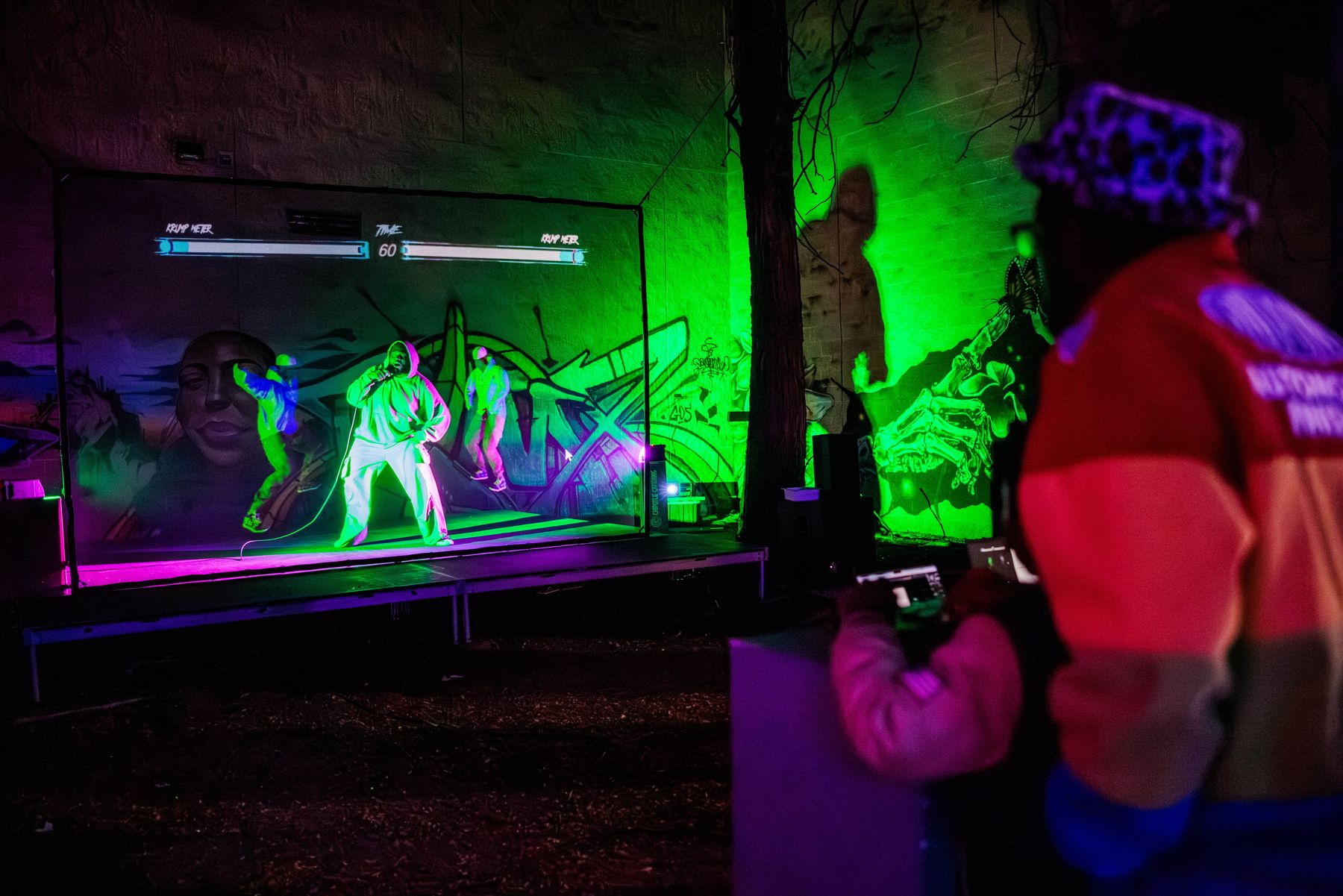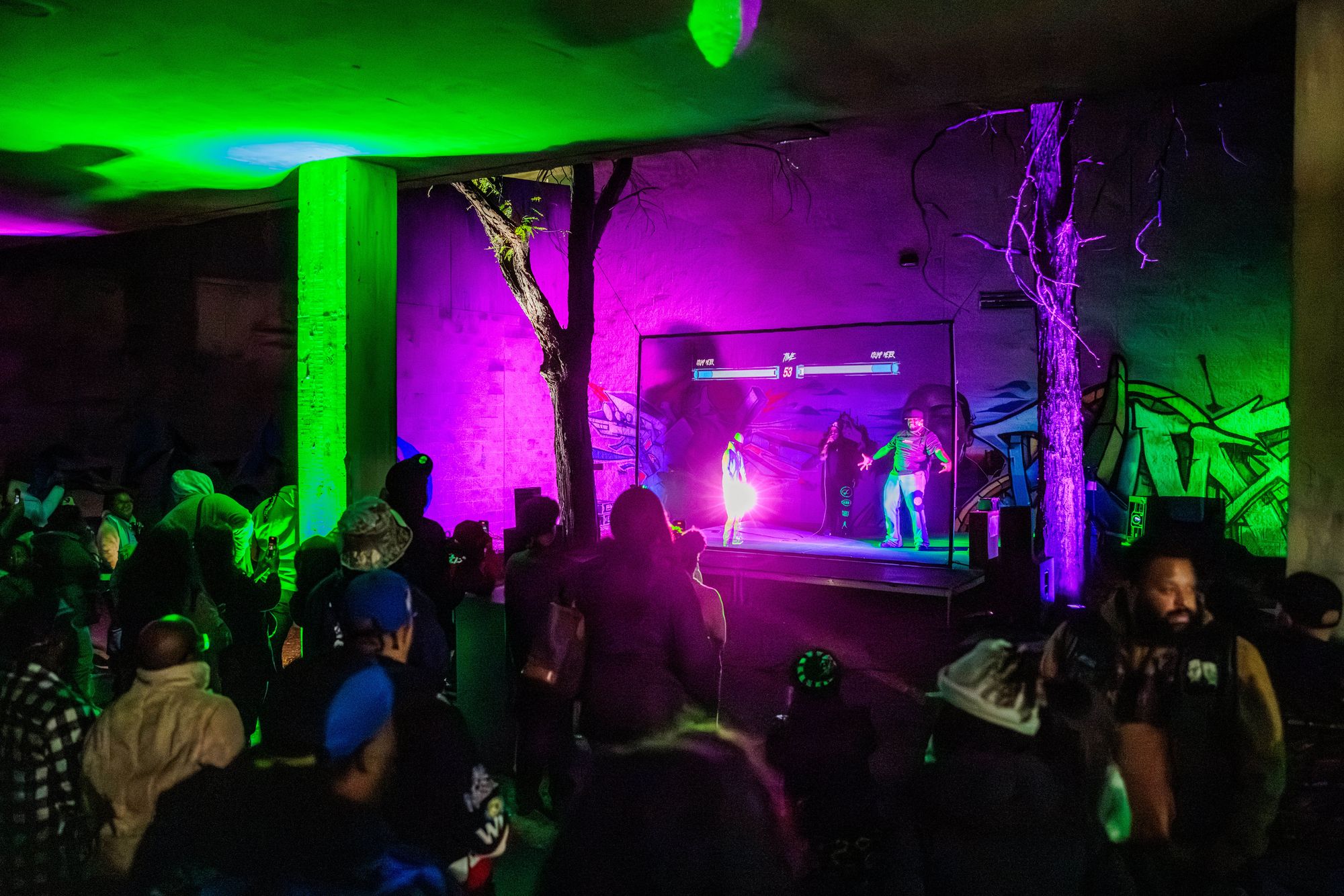
A crowd watching two krump dancers battle in front of a projection-mapped wall at night

PROOF OF CONCEPT  /  THREE PUBLIC ACTIVATIONS SHIPPED

KrumpBattles

A fighting game where the fighters are dancers.

Real krump dancers, motion captured move by move, rebuilt as playable avatars, and projected onto a wall the size of a building. The crowd picks a fighter. The dancer performs the round. The room decides who won.

Build
Unity HDRP
Capture
3 Dancers
Round Time
60s
Stage
Projection
01 The premise

Sports built a franchise
around the body.
Dance never got one.

A point guard has a signature move, a trading card, a jersey and a slot in a video game that ships every autumn. A krump dancer has the same virtuosity, the same training, the same rivalry structure and the same audience — and none of the apparatus.

Krump is a competitive form. It already has rounds, call-outs, judges, crews, lineage and a language of named moves. The scoreboard is the only piece missing, and it is the piece a game engine is built to supply.

Krump Battles takes the grammar of the fighting game — select your character, read your opponent, commit to a move, win the round — and points it at a dance form that was already playing by those rules.

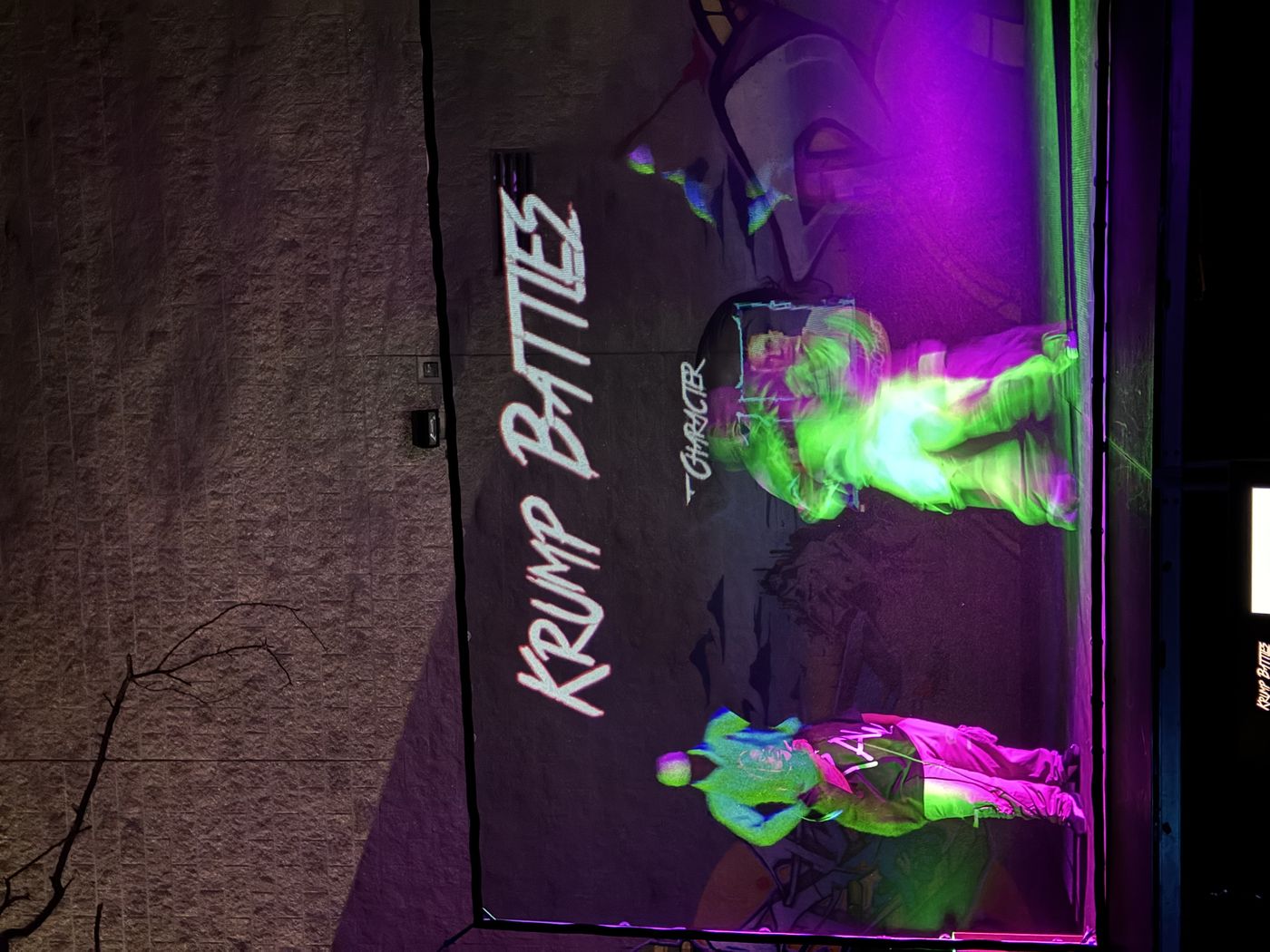
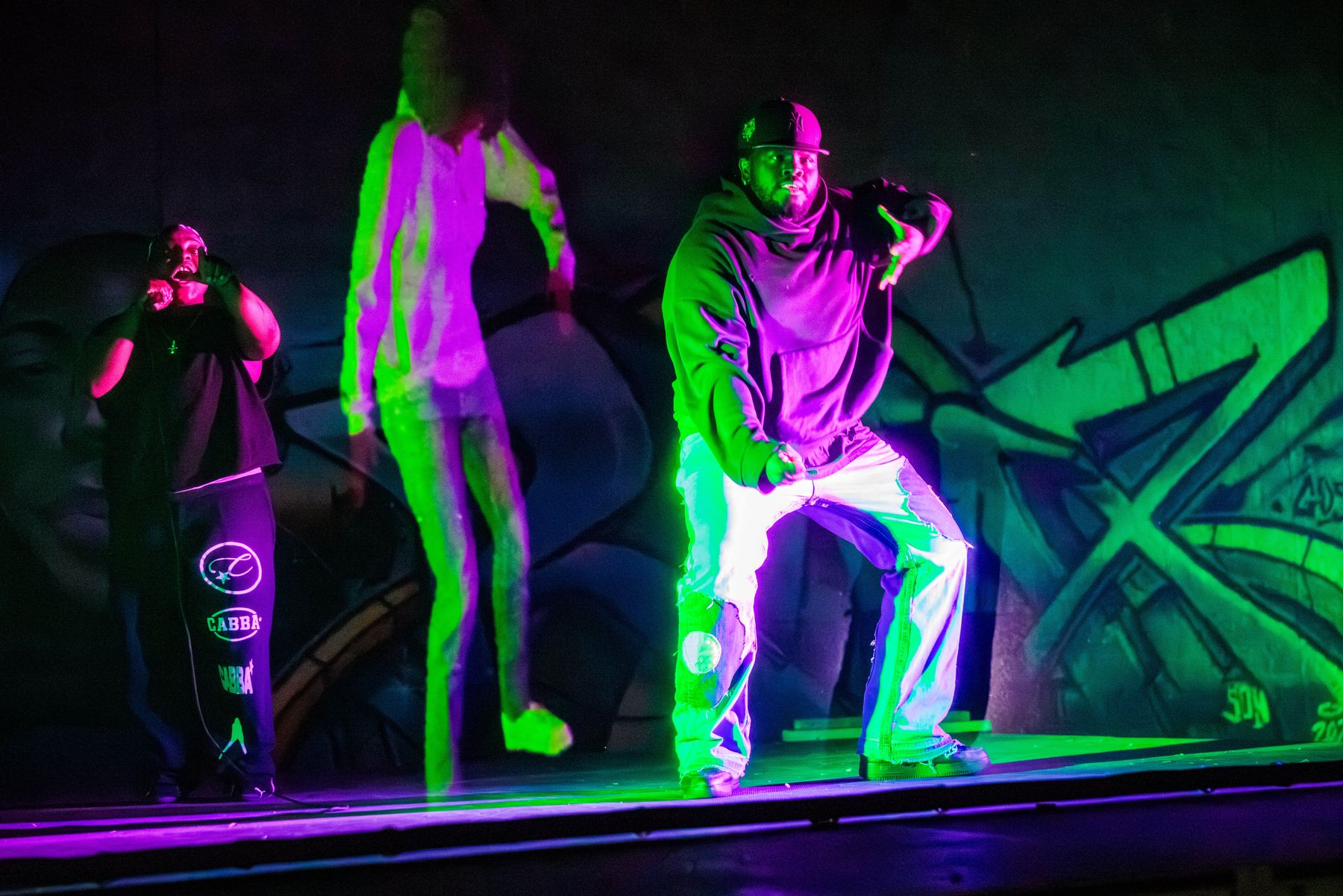
A krump dancer mid-move, lit acid green and magenta, with a projected avatar behind them
A dancer performing against their own captured avatar

02 The format

Fighting game mechanics,
dance vocabulary

Nothing here is metaphorical. The build runs a real state machine with real inputs, real transitions and a real win condition. The moveset is simply krump instead of karate.

Round structure
Round length60 seconds, on-screen countdown
ScoringKrump Meter per player, filled by landed moves and read live by the crowd
Select screenTwo players lock in from the roster before the battle scene loads
Core movesetJab Whip Stomp over a continuous bounce idle
Arcade inputA Jab   B Whip   Y Stomp
Keyboard inputSpace Jab   Shift Whip   D Stomp

The bounce is the neutral

Every krumper holds a bounce — a constant, weighted pulse that the rest of the vocabulary launches from. In fighting game terms it is the idle, and it is what makes the form legible as a game loop. Moves fire out of the bounce and settle back into it, exactly the way a blend tree wants them to.

The crowd is the judge

Krump is judged by reaction, not by a points table. At the activations we kept that. The meter tracks the round, but the room calls the winner, the same way a live battle has always worked. The game measures. It does not replace the culture around it.

Two ways to play

A visitor grabs the arcade stick and plays the avatar. Or a real dancer steps into the projection and battles their own captured self in front of the crowd. Both ran at the same installation, on the same build.

03 The pipeline

From a dancer’s body
to a playable character

This is the part that has to be repeatable. Every dancer we add runs the same five stages, which is what turns a one-off art piece into a platform.

01

Capture

The dancer performs their own vocabulary in a mocap session — bounce, jab, whip, stomp, transitions and a signature or two. We shoot their real moves, not a library approximation.

Raw skeleton data → segmented clips
02

Segment

Continuous takes get cut into discrete, loopable actions with clean entry and exit poses, so each move can be triggered independently and blended back into the idle without a visible seam.

5–6 clean actions per character
03

Retarget

Motion is retargeted onto a custom Character Creator 5 rig built to the dancer’s likeness, with explicit bone mapping and pose correction so proportion and weight survive the transfer.

Mocap skeleton → CC5 avatar rig
04

Drive

Clips are authored into a Unity Animator controller — blend trees and state machines wired so a button press resolves to the right transition at the right frame, in real time.

Animator controller → Input System
05

Project

The battle scene renders to render textures and is projection mapped onto a wall, so the avatars appear at human scale next to the dancers standing in front of them.

Render textures → mapped surface
06

Repeat

The whole chain is the product. Each new dancer is a bounded unit of work, which means the roster scales the same way a fighting game roster scales.

Read the full stack →

Full technical breakdown

04 The roster

Three dancers.
Three playable characters.

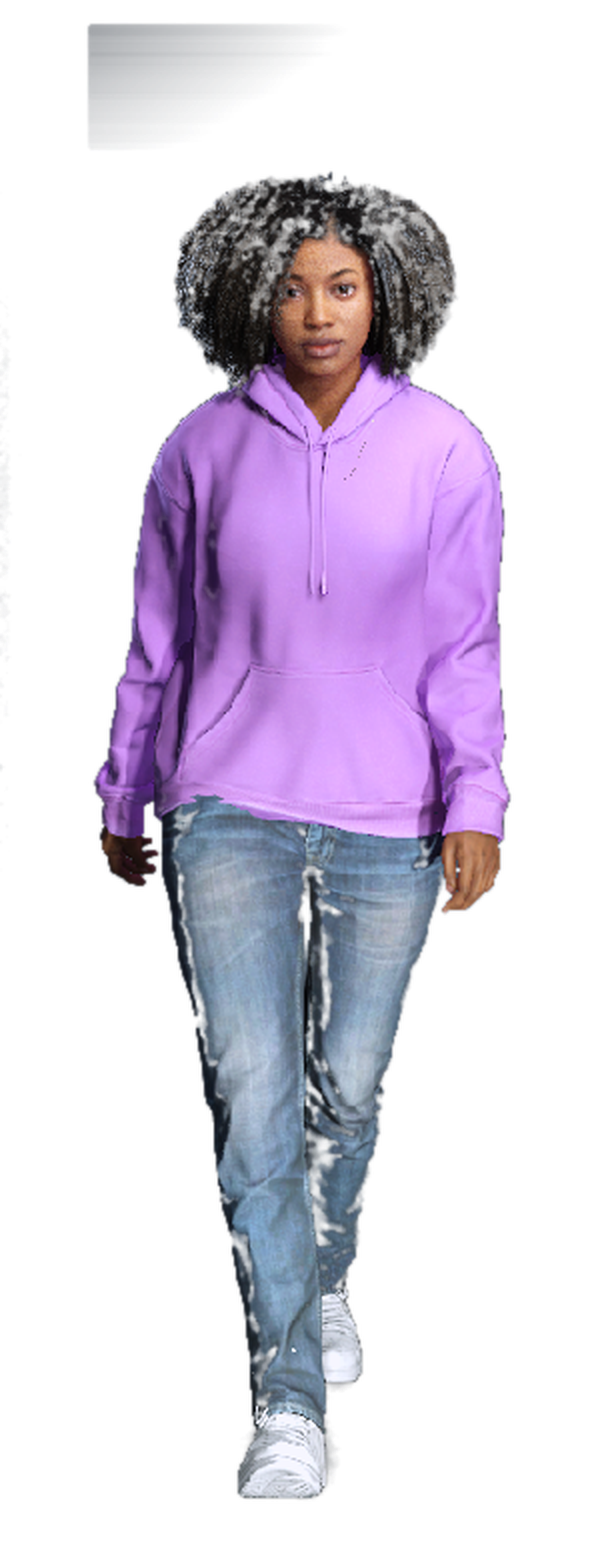
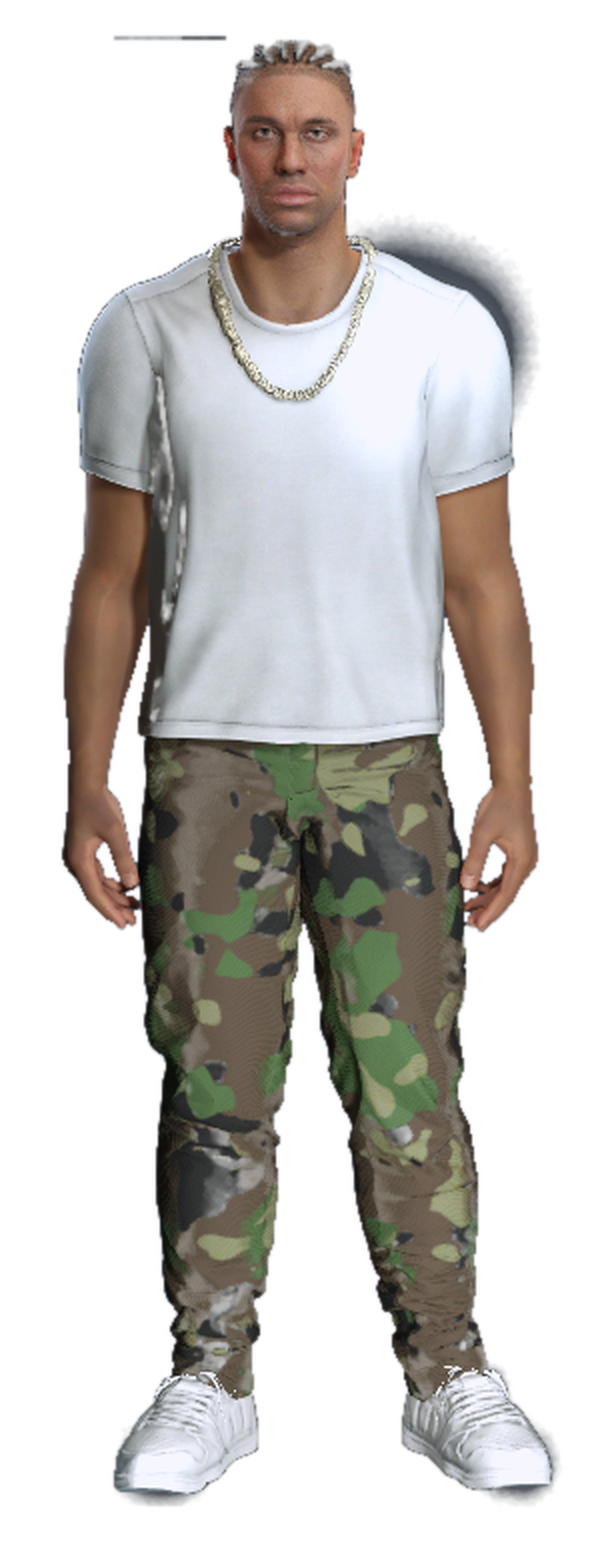
Each fighter is a real person with a real name in the scene. The avatar is built to their likeness and animated exclusively from their own captured movement, so what you play is that dancer’s style, not a generic one.

Open the roster  →

05 The proof

It has already run
in front of real crowds

Three public activations, three different rooms, one build. Not a render, not a sizzle reel — a running executable with dancers on it and strangers queuing for the stick.

People queued

The arcade pedestal held a line all night. A physical stick in a dark room does something a phone build cannot: it makes the thing a place, and the place fills up.

Dancers wanted in

The strongest signal was from the krump community itself. Dancers who saw the build asked how to get captured. That is the acquisition channel for a roster, and it is already open.

The scale reads

At projection scale the avatars stand at human height beside the performer. The comparison between the captured move and the live one lands instantly, with no explanation needed.

All three events  →

06 What we build next

From installation
to platform

The activation proved the loop. The next phase turns a single-room experience into a product with a roster, a progression system and a reason to come back.

The engineering work is sequenced and scoped. What it needs is funding and runway, not a new idea.

Near term

  • Powerups and round modifiers — give the meter something to spend
  • Roster expansion — more captured dancers, same pipeline
  • FX and hit feedback — impact language for landed moves
  • Music and sound design — the beat drives the round
  • Controller parity — arcade, gamepad and keyboard on one input map

Platform track

  • Dancer onboarding kit — a repeatable capture-to-character process
  • Touring installation build — calibration and setup a venue crew can run
  • Home release — the same roster on a screen instead of a wall
  • Likeness and revenue model — dancers paid as the characters they are
  • Other forms — the pipeline is style-agnostic; krump is the first one

07 Why this, why now

The technology got cheap
before the culture got credit

Capture is accessible

Motion capture and likeness-grade avatar creation no longer require a studio budget. A dancer can become a game character for a fraction of what the same work cost a decade ago, which is what makes a wide roster realistic.

Venues want this

Festivals, theatres and civic spaces are actively commissioning interactive, projection-scale work. We have already been booked into three. The installation is a revenue line, not just a marketing expense.

Nobody owns the category

Rhythm games ask you to follow. Fighting games ask you to compete. No shipping title treats a named, living dancer as a playable athlete with a signature moveset. That seat is open.

Concept validatedDone
Playable vertical sliceIn build
Shippable productFunding gate

Get in touch

Write to
the project

We are talking to investors, venues and festival programmers about the next phase. Dancers who want to be captured are welcome to write too.